
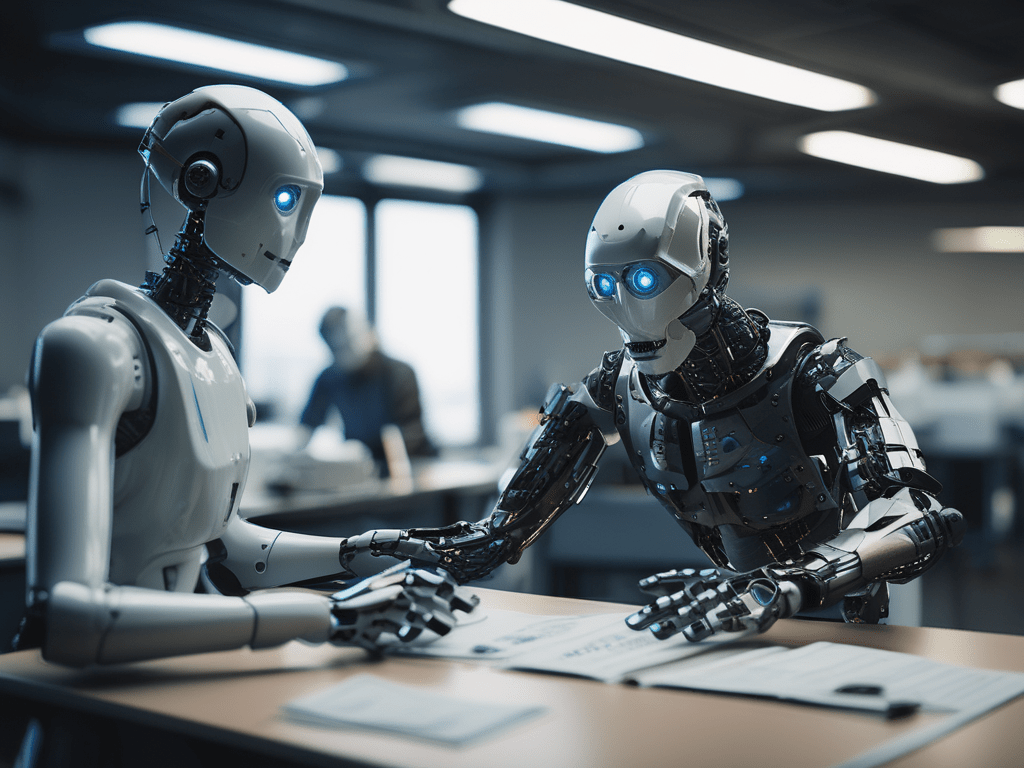
In recent years, artificial intelligence (AI) and robotics have advanced rapidly. This has sparked a wave of anxiety across various industries. Headlines predicting widespread job losses due to automation have become commonplace. This has created a sense of inevitability that robots will take over all our jobs. But, AI and robotics will reshape the job market. The idea that they will lead to mass unemployment is far from the whole story. Instead, we should view this technological evolution as an opportunity. We can create a future where jobs are more meaningful, creative, and fulfilling.
The Historical Perspective: Change Is the Only Constant
To understand the impact of AI and robotics on employment, it’s helpful to look back at history. Every major technological advancement has brought about fears of job losses. The Industrial Revolution, for example, replaced many manual labor jobs with machines, leading to widespread concern among workers. Similarly, the advent of computers and the internet in the late 20th century caused fears of obsolescence for countless professions.
Yet, despite these fears, new industries and job opportunities emerged. The Industrial Revolution gave birth to the manufacturing sector, which became a cornerstone of the global economy. Computers and the internet rose to prominence. This led to the creation of entirely new fields. These fields include software development, digital marketing, and cybersecurity. Each technological leap has ultimately expanded the economy, creating more jobs than it eliminated.
The Role of AI and Robots in the Workplace
AI and robotics are no different in this regard. They are tools designed to enhance human capabilities, not replace them entirely. Certain repetitive or dangerous tasks will be automated. This shift allows workers to focus on more complex, creative, and strategic aspects of their jobs.
For example, in manufacturing, robots can handle the heavy lifting. They also manage precision tasks. This reduces the risk of injury for human workers. This allows humans to take on roles in oversight, quality control, and innovation. In healthcare, AI can analyze vast amounts of data quickly, aiding doctors in diagnosis and treatment planning. But, the human touch in patient care—empathy, communication, and ethical decision-making—remains irreplaceable.
The key is to recognize that AI and robots are not replacements for human workers. They are collaborators that can help us achieve more. By automating mundane tasks, we can free up time and mental energy to focus on higher-level thinking, problem-solving, and creativity.
The Transition Period: Challenges and Opportunities
It’s important to acknowledge that the transition to an AI-driven economy will not be without challenges. Certain jobs will inevitably disappear, and some workers struggle to adapt to new roles. But, this has always been the case during periods of significant technological change.
Governments, educational institutions, and businesses have a crucial role to play in managing this transition. Investing in education and training programs that equip workers with the skills needed in a digital economy is essential. This includes not only technical skills. It also encompasses soft skills like critical thinking, creativity, and emotional intelligence. These are areas where humans excel, and machines do not.
AI and robotics are taking over repetitive tasks. So, there will be a growing demand for jobs that must uniquely human abilities. For instance, automation is increasing in industries like retail and customer service. So, there will be a higher demand for roles that require personal interaction. These include relationship management and customer experience design.
Additionally, the rise of AI and robotics is likely to spur the growth of entirely new industries. Consider the booming field of AI ethics. Experts are needed to navigate the complex moral questions that arise from the use of intelligent machines. Similarly, as more companies adopt AI, there will be an increased demand for AI specialists, data scientists, and cybersecurity professionals.
The Long-Term Outlook: A Balanced Economy
In the long run, the economy will adjust to the changes brought about by AI and robotics. While certain jobs will disappear, others will emerge. More importantly, the nature of work itself will evolve. Jobs will become less about performing repetitive tasks and more about leveraging human creativity, innovation, and emotional intelligence.
It’s also worth considering the broader societal impact of these changes. Robots are taking over more of the heavy lifting in industries like agriculture, manufacturing, and logistics. As a result, costs in these sectors are likely to decrease. This will lead to a higher standard of living for many people, as essential goods and services become more affordable.
Moreover, with AI and robots handling the more mundane aspects of work, humans will have more time. They can pursue their passions. They can engage in lifelong learning. They will also contribute to their communities. The concept of a work-life balance shift. People find themselves with more freedom. They can focus on what truly matters to them.
The Human Element: Why We Will Always Be Needed
AI and robots will not take over all jobs for a significant reason. They lack the essential qualities that make us human. AI can process vast amounts of data, but it can’t replicate human intuition, creativity, or empathy. These qualities are crucial in fields like education, healthcare, the arts, and leadership.
AI can analyze a student’s performance data and suggest areas for improvement. But it can’t inspire a love of learning. It also can’t give the mentorship that shapes a student’s character. In healthcare, AI can help diagnose diseases. But it can’t give the compassion and support that patients need during difficult times.
Similarly, in creative fields like writing, music, and design, AI can help in generating ideas or streamlining the production process. But it can’t replace the unique perspectives and emotional depth that human creators bring to their work.
Leadership is another area where humans excel. Effective leadership requires more than just data-driven decision-making. It requires the ability to inspire, motivate, and connect with others on a personal level. These are qualities that machines can’t replicate.
The Future of Work: A Collaborative Effort
As we move into the future, it’s crucial to view AI and robotics as partners rather than competitors. The future of work will be a collaborative effort. Humans and machines will work together to achieve greater efficiency. They will also foster innovation and creativity.
This collaboration will must a shift in mindset. We should focus on how we can use AI and robotics to enhance our work. This should be done rather than fearing job loss. By embracing these technologies, we can build a future where work is more fulfilling. We must invest in the skills needed to thrive in a digital economy. This will make work more balanced and meaningful.
Conclusion: A Bright Future Ahead
The fear that AI and robots will take over all jobs is understandable, but it is largely unfounded. While certain jobs will disappear, others will emerge, and the nature of work itself will evolve. We can focus on education, training, and the development of uniquely human skills. By doing so, we can make sure that the future of work is more meaningful. Jobs will also be more fulfilling.
In the long run, the economy will adjust. We will find that jobs are easier, more creative, and more aligned with our passions. After all, who will buy the products produced by robots if not us? The future of work is not one of scarcity. It is one of abundance. Technology empowers us to achieve more. It helps us live better lives. Embracing this future with optimism is essential. Being prepared will make sure that AI and robotics enhance our work. They will not replace it.
 Y Not Wealth
Leave a comment